

Planning news
Long Point – Loughrea outdoor amenity enhancement
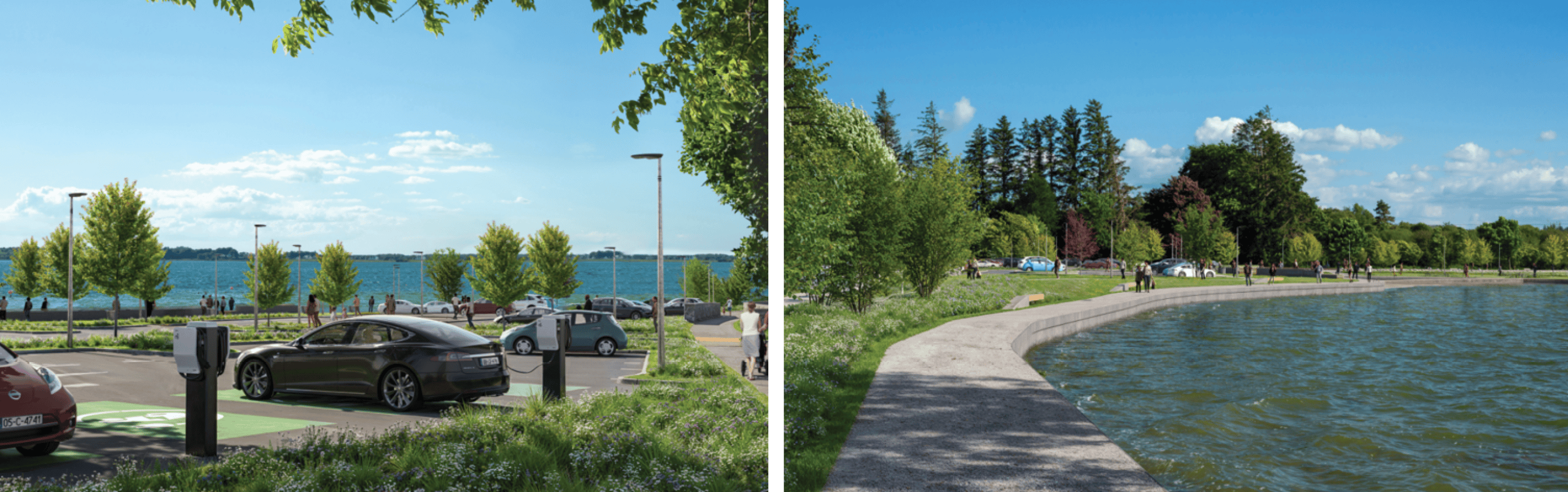
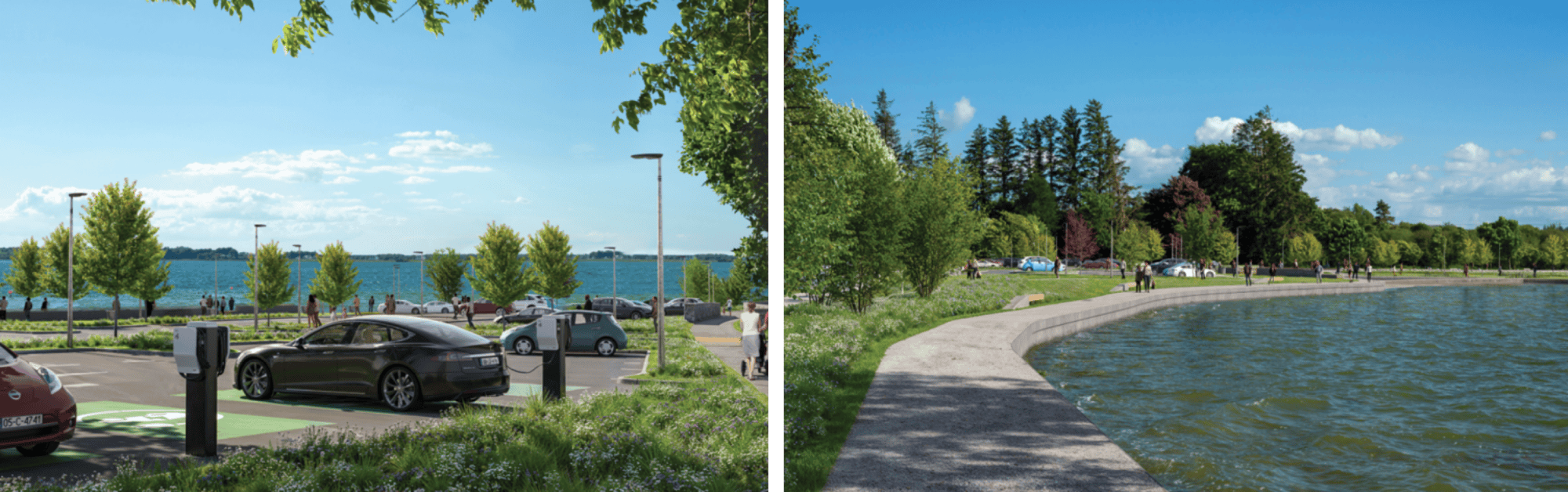
On behalf of Galway County Council, MKO is pleased to announce that planning permission has been successfully secured from An Coimisiún Pleanála (ACP) for a significant outdoor amenity enhancement and public realm improvement project at Long Point, Loughrea, Co. Galway.
The development will deliver a range of new facilities designed to enhance the visitor experience and support the growing popularity of the area as a recreational destination. Key elements of the project include the construction of modern changing rooms, toilet and shower facilities, a dedicated lifeguard hut, and upgrades to the existing car park infrastructure.
These improvements will provide enhanced accessibility, comfort, and safety for residents and visitors alike, while supporting increased recreational use of Loughrea Lake. The project represents an important investment in the local community and will contribute to the continued development of high-quality public amenities within County Galway.
MKO was delighted to work alongside Galway County Council in securing permission for this important project and looks forward to seeing the benefits it will bring to the area.
Lidl raises concerns over use of planning system in retail development
Supermarket chain Lidl has raised concerns with Government over what it describes as the use of Ireland’s planning system in a manner that may be limiting competition in the retail sector. In correspondence to the Minister for Housing and Local Government, the company argued that the current planning framework can lead to prolonged delays in the delivery of new retail developments, including situations where planning permissions are subject to repeated legal challenges after approval. Lidl suggested that some of these challenges may be used strategically in ways that impact competing retailers’ ability to progress developments in a timely manner.
The company, which has outlined plans for significant expansion of its store network in Ireland, stated that greater certainty and efficiency in the planning process is needed to support investment and ensure timely delivery of commercial and community infrastructure. It also highlighted the importance of reducing delays associated with objections and judicial review processes once permissions have been granted.
The comments form part of a wider ongoing discussion around planning reform in Ireland, with Government recently signalling further measures aimed at streamlining the system and improving delivery timelines for housing, transport, and commercial developments.
The debate reflects broader tensions between enabling sustainable development, ensuring fair competition, and maintaining robust opportunities for public participation in the planning process.
Renewables news
EU refers Ireland to court over peat cutting enforcement
The European Commission has decided to refer Ireland to the Court of Justice of the European Union over ongoing concerns regarding the enforcement of environmental rules relating to peat extraction and turf cutting. The Commission claims that Ireland has failed to adequately comply with the EU Environmental Impact Assessment (EIA) Directive, which requires that projects likely to have significant environmental effects are properly assessed and regulated. It argues that despite previous legislative changes and enforcement measures, “significant” peat-cutting activity continues in certain areas without appropriate planning permissions or environmental assessments.
According to the Commission, insufficient enforcement at national and local levels has meant that harmful extraction activities have persisted, particularly in sensitive peatland habitats protected under EU law. These areas are recognised as important biodiversity sites and play a key role in carbon storage and climate regulation. Ireland has previously engaged in a long-running infringement process with the EU on peatland protection, including letters of formal notice and reasoned opinions dating back over a decade. The referral marks a further escalation in the case, with potential legal and financial implications if compliance is not achieved.
The case highlights ongoing tensions between environmental protection obligations under EU law and the regulation of traditional and commercial peat extraction activities in Ireland.
Policy and legislation
Ireland champions renewable energy to power Europe’s digital future
As Ireland takes on the Presidency of the Council of the European Union, the Government is placing renewable energy and electrification at the centre of its European agenda. With electricity demand rising rapidly, driven largely by the growth of AI and data centres, Ireland is calling for faster investment in renewable energy, electricity grids and clean technologies across the EU.
Speaking ahead of Ireland’s presidency, Minister for Climate, Energy and the Environment Darragh O’Brien emphasised that Europe’s future competitiveness will depend on a secure, affordable and sustainable electricity system. He argued that accelerating electrification is essential not only to achieve climate targets but also to support economic growth and maintain Europe’s position as a global technology hub.
The issue is particularly significant for Ireland, where data centres already account for more than one-fifth of national electricity demand. As AI technologies continue to expand, electricity consumption is expected to increase further, placing additional pressure on the country’s power system.
To balance economic growth with climate commitments, Ireland has introduced new requirements for future data centre developments. New facilities seeking grid connections must demonstrate that at least 80% of their electricity demand will be supplied from renewable energy sources. This approach aims to encourage continued investment while ensuring that growth does not compromise Ireland’s renewable energy and decarbonisation targets.
Alongside renewable generation, Ireland is advocating for greater investment in electricity grid infrastructure across Europe. Modernising and expanding transmission networks will be essential to integrate higher levels of wind and solar generation, improve energy security and accommodate increasing electricity demand from homes, businesses and emerging industries.
As Europe continues its transition towards a low-carbon economy, Ireland’s message is clear: renewable energy, stronger electricity networks and smart infrastructure must develop together. The challenge will be delivering this investment at the pace required to support both climate ambitions and the rapid growth of Europe’s digital economy.
Policy and legislation
Climate Action Plan 2026 faces further delays
The publication of Ireland’s Climate Action Plan 2026 has been delayed once again, with the Department of Climate, Energy and the Environment confirming that the plan is now expected to be published in the coming months rather than at the start of the year as originally anticipated. The annual plan is a key policy document that outlines the measures required to reduce greenhouse gas emissions and support Ireland’s transition to a low-carbon economy.
The delay comes at a time when Ireland remains significantly off track in meeting its legally binding emissions reduction targets for 2030. Government officials have indicated that the revised plan will place a stronger emphasis on strategic, long-term actions aligned with future carbon budgets and Ireland’s commitment to achieving climate neutrality by 2050. The continued postponement has prompted discussion among policymakers, industry stakeholders and climate experts regarding the pace of climate action delivery and the importance of providing clear policy direction to support investment, infrastructure planning and emissions reduction measures across all sectors of the economy.
Public consultations
Kilkenny County Council: Proposed Variation No.8B to the Kilkenny City & County Development Plan 2021: NPF Implementation – Housing Growth Requirements Callan, Graiguenamanagh and Thomastown. Open: 1st May 2026 at 09:00 – 29th May 2026 at 23:59.
Kilkenny County Council: Proposed Variation No. 10 to the Kilkenny City and County Development Plan 2021: Sustainable Urban Mobility Plan for Kilkenny City. Open from 15th May 2026 at 09:00 – 12 June 2026 at 23:24.
Monaghan County Council: Proposed Variation No 2 to the Monaghan County Development Plan 2025-2031. Open from 14th May 2026 at 08:00 – 11th June 2026 at 17:00.
Wexford County Council: Proposed Material Alterations to Proposed Variation No. 1 to Wexford County Development Plan (2022 – 2028. Open from 29th April 2026 at 09:00 – 28th May 2026 at 17:00.
Wicklow County Council: Proposed material alterations Arklow local planning framework variation to the county development plan 2022 – 2028. Submissions are invited from 1st May 2026 to Friday 29th May 2026 (5pm).
Dun Laoghaire-Rathdown County Council: Proposed Variation No.1 to the County Development Plan 2022-2028. Submissions are invited from Thursday 28th May 2026 – Friday 26th June 2026.