

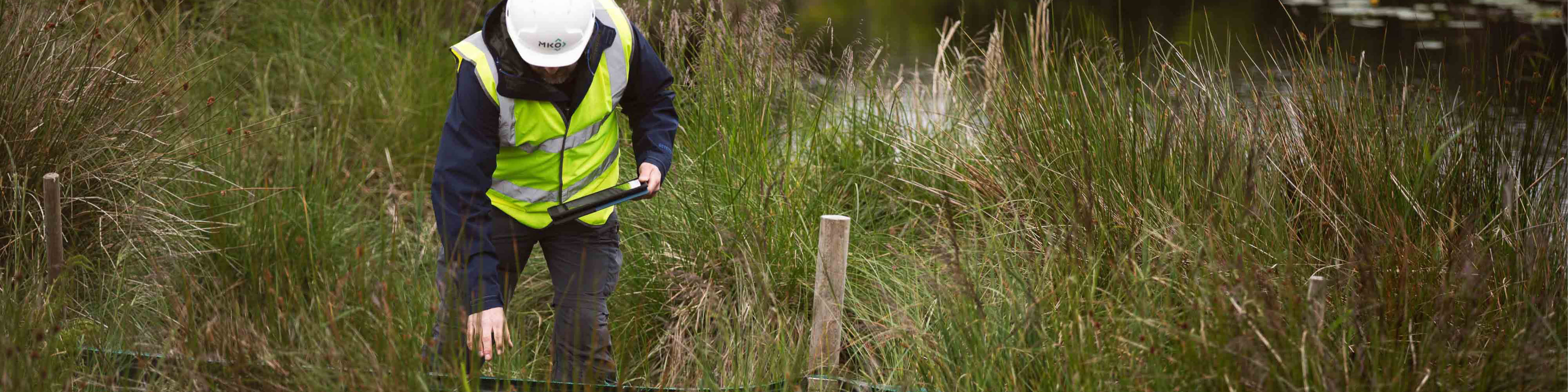
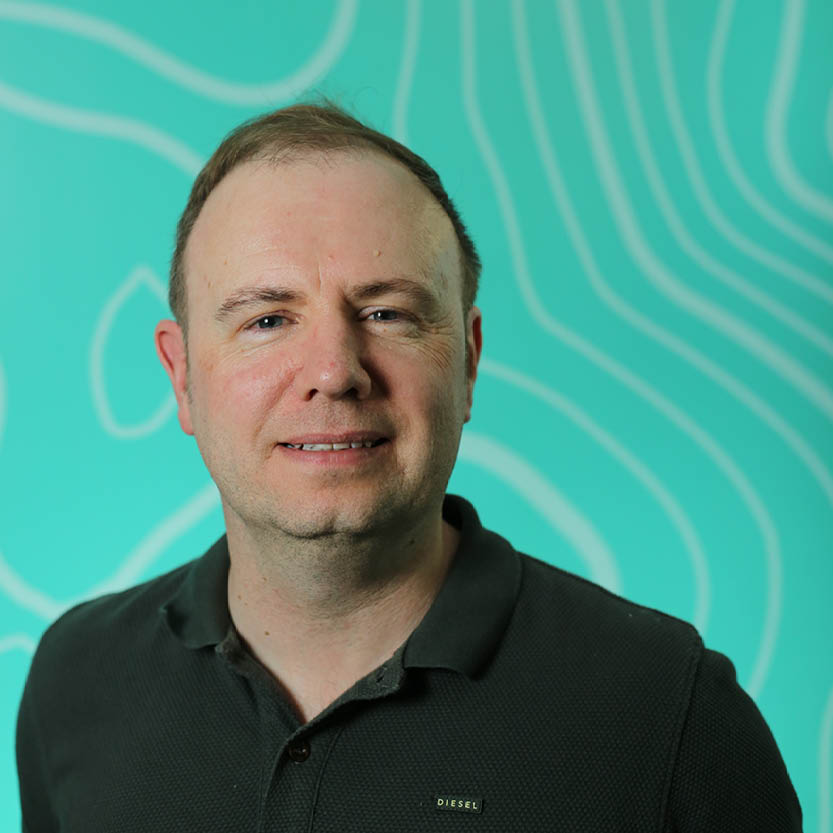
Patrick is a Senior Environmental Scientist in our ECoW team. Patrick joined MKO in 2016 as an Environmental Scientist. Patrick studied Construction Management and holds a Masters in Environmental Systems from Atlantic Technological University. Patrick has carried out ECoW roles throughout various projects, from renewable to civil and water treatment since joining MKO.
What sparked your interest in working as an Environmental Clerk of Works (ECoW)?
I always had a strong interest in construction and also the environment. I gained experience in the construction sector and involvement in environmental oversight through my initial roles after graduating with a degree in construction management and motorway construction, which in turn sparked my interest in pursuing a Master’s in Environmental Science and working in the sector. My interest then involved projects with environmental sensitivities and helping protect the environment while also delivering important projects like renewable energy developments, which help safeguard the valuable resources in our environment.
What types of projects are you currently working on?
I work on a range of projects including wind farm developments, solar developments, public road schemes, waste water treatment plant schemes and waste remediation of contaminated lands. The role of Environmental Clerk of Works (EnvCoW) also means I work independently of the contractor, e.g for the local authority or directly for the contractor depending on the client requirements.
Can you describe your typical day as an ECoW?
My typical day working as an ECoW project will begin by preparing all my equipment and organising a vehicle appropriate for the site conditions. The equipment will usually involve sampling and field-testing equipment to carry out checks on water quality for prescribed limits as outlined in the Construction and Environmental Plan (CEMP) and planning compliance documents. I would then spend some time at the desk to check for any issues of sensitivities related to that particular site that I would see a need to focus on in that day, like action items related to mitigations that were highlighted on a previous visit. I also review the program of works to be aware of site activities and prepare for any potential ecological and environmental risks that may be encounter and to advise the contractor in advance.
During my site visit, I first check in with the site representative or liaison, which would normally be the site engineer or manager and ask if they need my input that day or if they are encountering any issues that I can assist with and attend site meetings. I then follow a pre-determined list of checks of sensitive watercourses and site works to monitor, document and record activities, and any issues encountered. Any issues observed will be reported back to the site manager and also documented and sent to the manager as an action list or report. Lastly, I take water samples for laboratory analysis and conduct field tests if required that day.
What specific tools or equipment do you use onsite?
For environmental compliance monitoring, we can use equipment like continuous turbidity monitors (SONDEs) to ensure silt contamination is not occurring from the development. Field testing equipment can include pH, dissolved oxygen, electrical conductivity and hand-held turbidity monitors.
What are some of the most interesting projects you’ve worked on?
A lot of the windfarms I have worked on have been really interesting in terms of the construction techniques like directional drilling under watercourses and the turbine delivery and assembly. My experience on a pharmaceutical waste remediation site (Roche, Clarecastle) was also very interesting from the unique aspects relating to the remediation processes and environmental compliance aspects involved.
What do you enjoy most about your role at MKO?
I enjoy the hybrid aspect of working both on site and in the office. I enjoy helping clients with their compliance requirements and delivering a project that does not adversely affect the ecology and environment.
What are the most important skills required for your role?
While many core technical skills grounded in ecology or environment are important, a genuine interest in best practice in ecology and environmental standards and working with a developer or contractor to complete a project without having adverse impacts on the environment. Other core skills, including good communication and problem solving are also important to perform the role.
What is the most exciting thing about the future of ECoW?
There is a lot of discussion and consultation going on around the role of ECoW from professional bodies like the Chartered Institute of Ecology and Environmental Management (CIEEM) and the Association of Environmental Clerks of Works (AEnvCoW) based in the UK, and the evolving role of the ECoW on sites and how best the role can serve and adapt in an ever-changing industry with new challenges and construction practices.