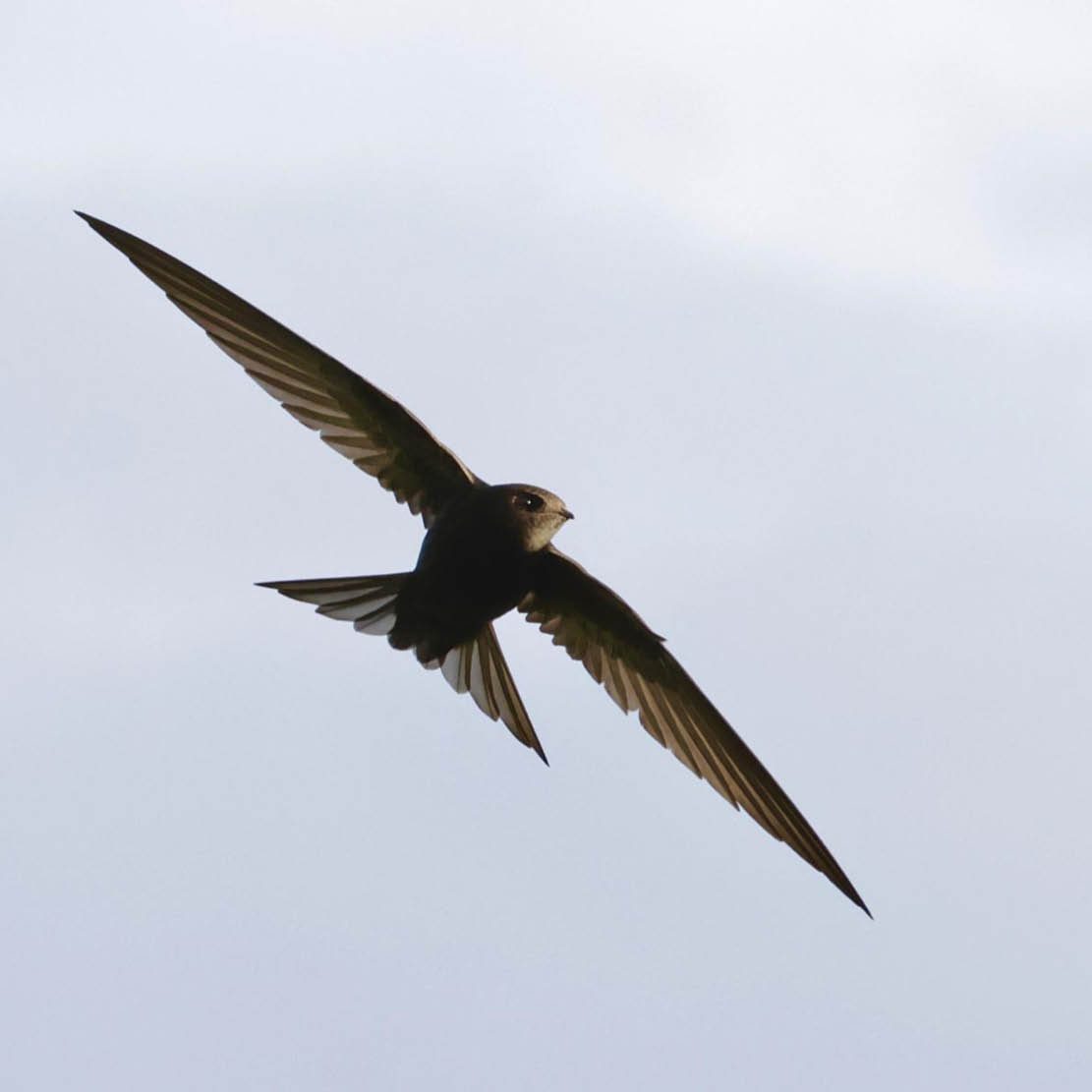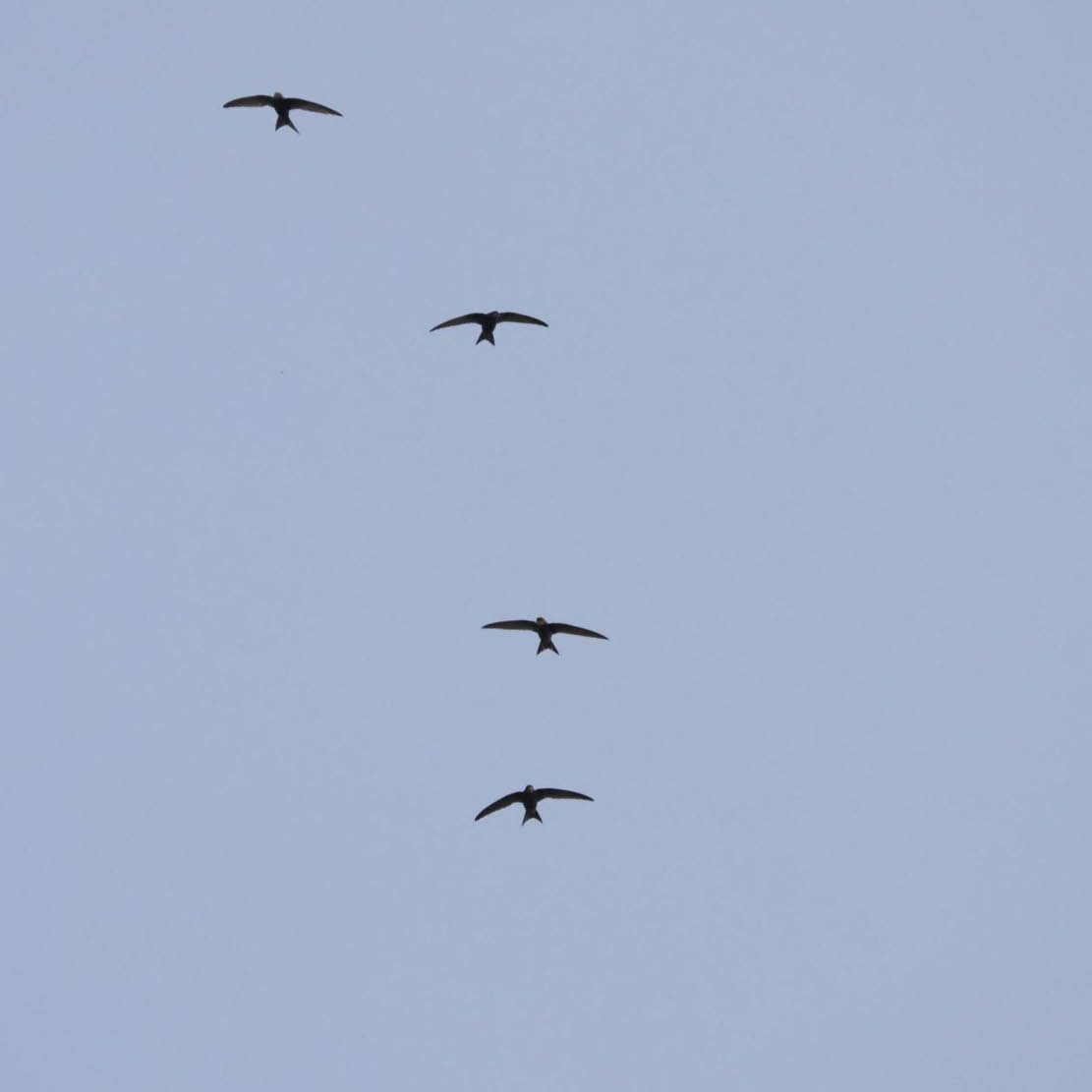

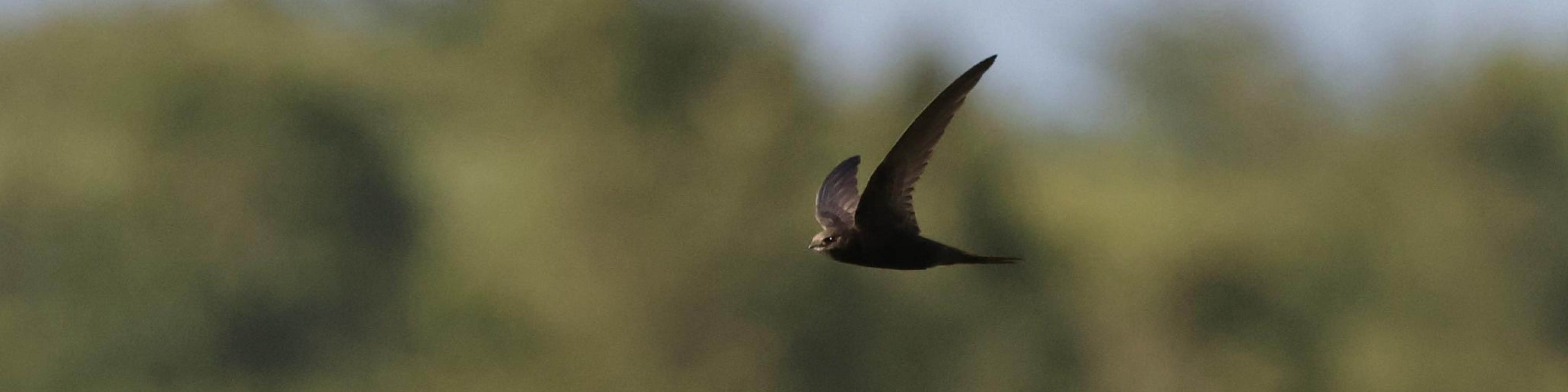
The common swift (Apus apus) is a remarkable little bird that graces the island of Ireland during the summer months of every year. We have come to the end of their residency for this season, and they will have set off on their great journey down to Africa. Their Latin name stems from the idea that swifts were a type of ‘footless’ (apus) swallow, an understandable deduction as swifts spend their entire life airborne, living as obligate aerial insectivores. Landing only to lay their eggs, they at one time bred in cliff faces and tree trunks, now relying heavily on the creviced structures of old buildings. From late April to August they can be seen circling high in the sky before screeching low over rooftops in crazed groups. Their name as Gaeilge is Gabhlán gaoithe meaning wind fork alluding to their speedy flight and small forked tail.
They are a significant migratory species in Ireland, performing a dramatic migration across the Sahara twice a year. The European population will typically settle around the Congo basin for the winter, though they will not touch the ground during this time. In their lifetime they will fly about three million kilometres, more than four trips to the moon and back. Interestingly, while swifts mate for life, they will not remain with their partners during migration.
Sadly the numbers returning to Ireland have been on a steady decline. Between 1998 and 2016 an alarming 58% drop in the breeding population was recorded by Birdwatch Ireland on behalf of National Parks and Wildlife Services. This has placed them on the BoCCI Red List alongside birds such as the Corncrake and the Curlew. A key driving factor in this decline has been the development of modern buildings with insulated architecture and sleek designs, greatly reducing the number of usable nooks and crannies. As swifts are faithful to their nesting sites, returning every year to the same place, these developments are fairly disastrous for them. On top of this loss, their main food source is being decimated by pesticides and habitat erasure. Fewer and fewer breeding pairs are recorded every year, despite ongoing efforts by local groups.
Swifts have been long studied as a bird of interest. Their charming behaviour has garnered much attention over the years as they swoop and screech over houses and fields in Irish summers. This identifiable activity and reliable migratory patterns allow for accessible citizen science initiatives and local surveys. Conducted by Swift Conservation Ireland and Birdwatch Ireland, county level surveys have successfully mapped nesting sites, allowing for the placement of swift boxes in beneficial locations. An excellent example of successful swift box use is in Lough Lannagh Leisure Centre in Castlebar, Co. Mayo, where ‘screeching parties’ of swifts can be enjoyed. It is thanks to these initiatives and surveys that much of the data surrounding Swifts in Ireland exists, and local populations in some areas have actually seen an increase in recent years. The enthusiastic end of season notes from active volunteers can be found on the Birdwatch Ireland website currently.
Photo credit: Luke Lambert, Ornithologist